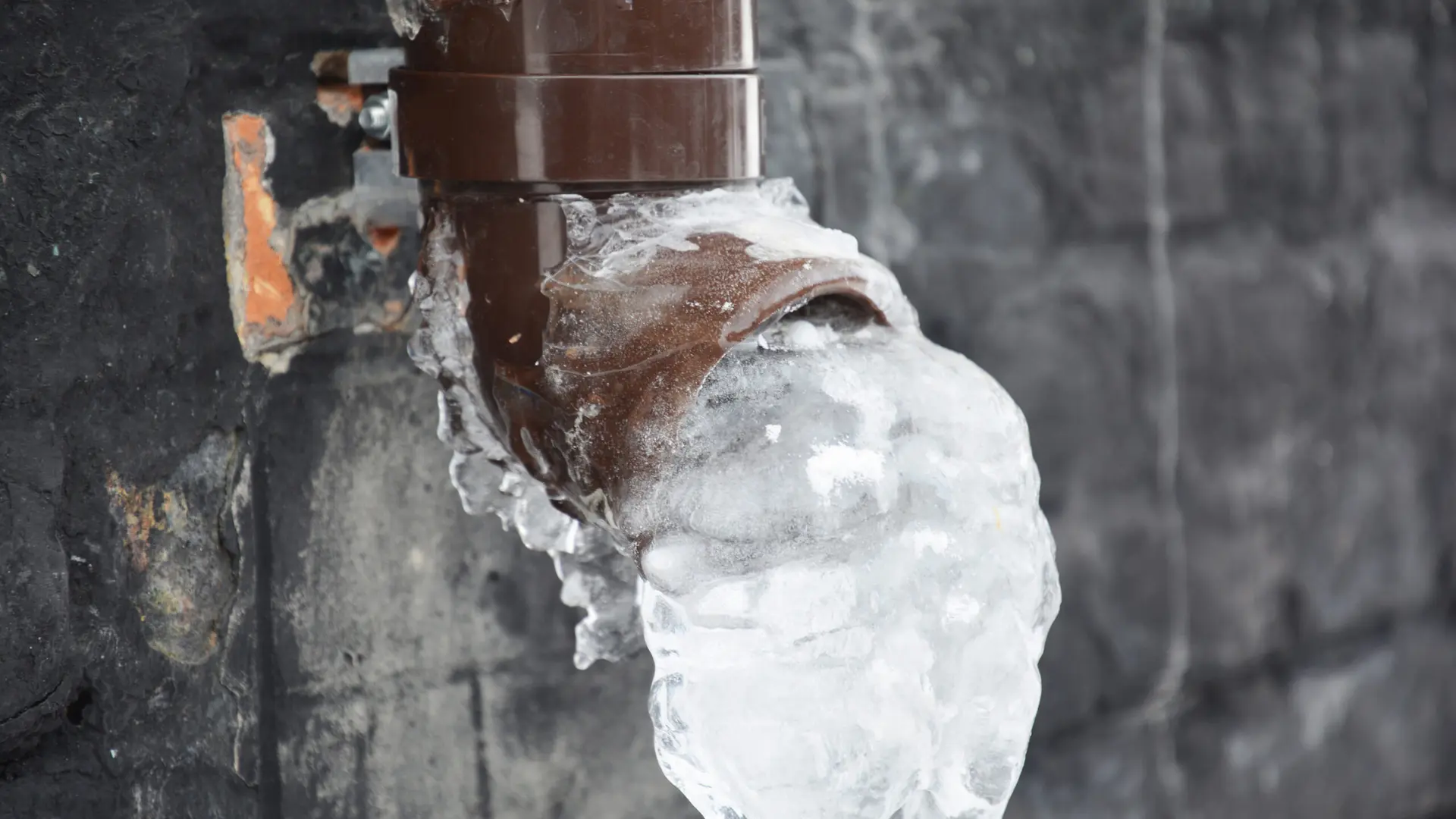
On a frigid North Shore morning, you turn on the faucet… and nothing. Every Quebec homeowner’s winter nightmare becomes reality: a frozen pipe. And in the worst-case scenario, it has already burst, threatening your home with thousands of dollars in water damage.
This situation is more than an inconvenience—it’s a costly domestic emergency.
On Montreal’s North Shore, prolonged winters and deep cold put a heavy strain on plumbing installations. Pipes located in crawl spaces, unheated garages, north-facing walls, and poorly insulated basements are particularly vulnerable.
The good news? The vast majority of freeze damage is preventable. Proactive preparation and understanding a few key principles can protect your home and your peace of mind all winter long.
This guide from Plomberie A. Craig explains why pipes freeze and provides you with a concrete, room-by-room action plan to secure your system. We’ll also cover warning signs and the steps to take if you suspect a freeze.
Table of Contents
- Why Do Pipes Freeze and Burst?
- Vulnerability Audit: Identify Sensitive Points
- 5-Pillar Strategy for Optimal Protection
- Targeted Insulation: Techniques and Materials
- Heat Tape (Heating Cable): When and How to Use It
- Letting a Faucet Drip: Effective or Futile?
- Autumn Preparation Checklist
- Steps to Take in Case of a Frozen Pipe (Emergency)
- Actions Strictly Forbidden for Thawing
- Warning Signs to Watch For
- Special Cases: Cottages, Garages, and Outbuildings
- When to Call a Professional Plumber
- Frequently Asked Questions About Freezing
- Conclusion: Anticipation is Your Best Ally
Why Do Pipes Freeze and Burst?
Water expands by approximately 9% in volume when it freezes. This expansive force is colossal and sufficient to crack copper, steel, or PVC.
The Cascade Process:
- Starting Point: Freezing often begins on an isolated segment—a section in an unheated space, exposed to wind.
- Ice Plug Formation: Water freezes at that spot, creating a blockage that traps liquid water upstream.
- Pressure Buildup: The remaining water, blocked, exerts enormous pressure on the pipe wall.
- The Rupture: The pipe gives way at a weak point (solder joint, bend, corrosion). The crack can be tiny.
- The Thaw Catastrophe: When temperatures rise, the ice plug melts. Water under normal municipal pressure then escapes through the crack, causing flooding. Damage is often discovered after the freeze, not during.
⚠️ Local Context: On the North Shore, temperatures can stay below freezing for long periods, deeply freezing pipes. Repeated freeze/thaw cycles are also very destructive.
Vulnerability Audit: Identify Sensitive Points
Take 30 minutes to inspect your home. A flashlight is essential.
| Area to Inspect | What to Look For | High Risk For… |
|---|---|---|
| Basement / Crawl Space | Exposed pipes near exterior walls, open vents, lack of insulation on pipes. | All homes, especially older ones with uninsulated crawl spaces. |
| Garage | Supply pipes (for washer, sink) in an unheated garage. Defective door seals. | Houses with laundry room or sink in garage. |
| Kitchen & Bathroom | Cabinets under sink/vanity on an exterior wall. Drafts. Pipes behind tub/shower. | Corner rooms, extensions, basement bathrooms. |
| Exterior Walls | Constantly cold rooms. | Bedrooms and offices facing north/northwest. |
| Exterior | Unprotected outdoor faucets, undrained irrigation system. | All properties. |
Conclusion: List all places where pipes are exposed to temperatures below 0°C. These are your priority action zones.
5-Pillar Strategy for Optimal Protection
A multi-layered defense is the most robust.
🔧 Pillar 1: Complete Drainage of Outdoor Installations
Before the first serious freeze (late October/early November):
- Close the interior supply valve for each outdoor faucet.
- Open the outdoor faucet to drain it.
- Place an insulating cap (Styrofoam) on the outdoor faucet.
- Have your underground irrigation system professionally purged.
- Empty and store your garden hoses.
🧤 Pillar 2: Insulation of Exposed Pipes
The goal: create a thermal barrier. Use foam pipe insulation sleeves (polyethylene) for accessible pipes. We’ll detail this below.
🏠 Pillar 3: Elimination of Drafts
Cold air infiltration cools spaces housing pipes.
- Caulk cracks around pipe, wire, and duct entries.
- Install door sweeps on doors leading to unheated spaces (garage, basement).
- Close crawl space vents for the winter.
🌡️ Pillar 4: Temperature Management
- Keep cabinet doors open under sinks/vanities on exterior walls.
- Maintain a minimum temperature in the house, even when away. Do not go below 15°C (59°F).
- For unheated spaces with pipes, consider a safe supplemental heater (electric radiant heater with thermostat).
💧 Pillar 5: Water Circulation
Moving water freezes much more slowly.
- During extreme cold spells (warnings of -25°C or below), let a thin stream of cold water run from the faucet farthest from the water entry point.
- If leaving on vacation, do not turn off the heat. Set the thermostat to at least 15°C and arrange for daily checks.
Targeted Insulation: Techniques and Materials
Insulation slows the transfer of heat from the (relatively warm) water to the surrounding cold air.
Recommended Materials:
- Foam Pipe Sleeves (Polyethylene): Most common solution. Easy to install (pre-slit). Recommended minimum thickness: 13 mm (1/2 inch).
- Heat Tape (Heating Cable): An electrical cable that produces low heat. Must be used with a thermostat and covered with insulation. For highly exposed areas.
- Structural Insulation: Long-term, insulating walls, ceilings, and floors of unheated spaces is the best protection.
Installing Foam Sleeves:
- Measure your pipe diameter (often 13 mm or 19 mm for supply lines).
- Purchase the correct size sleeves.
- Clean the pipes of any dust.
- Slide the slit sleeve onto the pipe.
- Seal the seams and ends with appropriate tape (aluminum or vinyl). Avoid standard masking tape.
📍 North Shore Priorities: Focus your efforts on crawl spaces, garages, and north-facing walls. Older homes and extensions are particularly vulnerable.
Heat Tape (Heating Cable): When and How to Use It
When passive insulation isn’t enough (e.g., a crawl space consistently below 0°C), an active heat source is needed.
Principle: A self-regulating cable, attached along the pipe, produces heat when the temperature drops.
Imperative Rules:
- NEVER install heat tape without insulating over it. The insulation concentrates the heat on the pipe.
- CHOOSE a self-regulating model with a thermostat.
- HAVE IT INSTALLED by a professional (plumber/electrician) if you are not comfortable with electrical connections. Fire risk otherwise.
- INSPECT the cable each fall before use.
Indicator: If a pipe is in a space that is never above 0°C in winter and it’s impossible to heat that space economically, heat tape is your solution.
Letting a Faucet Drip: Effective or Futile?
Letting a faucet drip is an emergency measure, not a permanent solution.
Effectiveness: YES, under specific conditions. Moving water requires more cold energy to freeze and reduces pressure in the system.
When to Apply It:
- Only during extreme and prolonged cold spells (typically below -20°C).
- Especially for pipes you know are vulnerable (based on your audit).
- Preferably at night, during the lowest temperatures.
How to Do It Correctly:
- Choose the faucet farthest from the water main entry.
- Let a thin stream of cold water (the width of a toothpick) run.
- Place a container to catch the water and avoid waste.
Autumn Preparation Checklist
To do every year, ideally in October:
- Empty and store all garden hoses.
- Close/drain outdoor faucets. Install insulating caps.
- Have the irrigation system purged.
- Drain pools and fountains.
- Inspect/repair pipe insulation in basement, crawl space, garage.
- Test existing heat tapes.
- Caulk air leaks.
- Set the thermostat to a minimum of 15°C at all times.
- Locate and identify the main water shut-off valve. Ensure all adults know how to operate it.
Steps to Take in Case of a Frozen Pipe (Emergency)
The faucet only gives a trickle, or nothing? Stay calm and act methodically.
🔴 STEP 1: OPEN THE FAUCET
Immediately open the affected faucet (both cold and hot). This will allow water to flow and relieve pressure as thawing begins.
🔴 STEP 2: LOCATE THE BLOCKAGE
Trace the pipe path from the faucet back toward the water source. Touch the pipe (if accessible) to feel for the abnormally cold section. Check your identified vulnerable zones.
🔴 STEP 3: THAW GENTLY AND SAFELY
Always start at the end closest to the faucet and work your way back toward the blockage.
- Preferred Method: Use a hair dryer. Keep it at a safe distance and sweep the pipe section. Do not concentrate heat on one spot.
- Other Methods: Wrap the pipe with warm, wet towels, changing them regularly. Use a heating pad.
- For inaccessible pipes: Gradually increase the ambient temperature (with a safe space heater, open cabinet doors). Be patient.
🔴 STEP 4: MONITOR FOR LEAKS
During and after thawing, watch closely the pipe and surrounding areas (ceiling, walls) for any signs of moisture or dripping. STAY NEAR THE MAIN SHUT-OFF VALVE. At the first sign of a leak, turn it off immediately.
🔴 STEP 5: LET THE WATER FLOW
Once water is flowing normally again, let it run for several minutes to flush out any remaining ice and stabilize the pipe temperature.
🚨 IF YOU DETECT A LEAK AFTER THAWING: Shut off the main water valve immediately. Cut power to the flooded area if safe to do so. Call an emergency plumber and your insurance company.
Actions Strictly Forbidden for Thawing
These common practices are extremely dangerous:
- ❌ NEVER use a blowtorch, propane torch, or any open flame. Major fire risk and can severely damage the pipe or start a fire in the wall structure.
- ❌ DO NOT use heating pads or electric blankets not designed for this purpose, especially near water.
- ❌ DO NOT hit the pipe to break the ice. This can cause mechanical damage.
- ❌ DO NOT overheat with a hair dryer by holding it too close. Excessive heat can damage joints and solder.
Patience is key. A slow thaw is a safe thaw.
Warning Signs to Watch For
Don’t ignore these alerts:
- Visible frost on the surface of a metal or PVC pipe.
- Unusual smell from a faucet or drain (ice can trap debris and odors).
- Unusually reduced water flow from a single faucet (an early sign of internal ice formation).
- Unusual noises (clicking, cracking) when using water, which may indicate restriction due to ice.
If you observe any of these signs, act immediately by applying gentle thawing methods and increasing heat around the affected pipe.
Special Cases: Cottages, Garages, and Outbuildings
These properties present an even higher risk due to intermittent use.
Cottages / Secondary Residences:
- Complete System Winterization (“Winterization”): This is the safest method. A professional plumber uses an air compressor to blow all water out of pipes, traps, and appliances. The system is then filled with non-toxic plumbing antifreeze for traps.
- Alternative (less safe): Maintain minimum heat (15°C), shut off water at the entry point, and completely drain the system by opening all faucets after shutting off the water. Pour non-toxic plumbing antifreeze into all traps (sinks, toilets, floor drains).
Garages with Water:
- If water pipes must be installed, run them along warm interior walls, never along exterior walls or in the slab.
- Aggressively insulate garage walls and ceiling.
- Consider an isolation valve on the garage supply line, allowing it to be drained and isolated from the rest of the house in winter.
Wells, Sheds, and Pressure Tanks:
- Insulate the enclosure housing the pump and tank like a small house. Often use a thermostatically controlled heat tape on the discharge line and a tank heating cord.
- Wrap buried pipes exiting the well with waterproof rigid insulation down to below the frost line (1.5m+ in Quebec).
When to Call a Professional Plumber
Contact an RBQ-licensed plumber like Plomberie A. Craig in the following situations:
- You cannot locate the frozen section.
- The frozen pipe is inaccessible (sealed in a wall, ceiling, or floor).
- Your thawing attempts have been unsuccessful.
- You discover an active leak.
- You need to install heat tape permanently and safely.
- Complete winterization is required for a secondary residence.
- You want a professional evaluation of your system’s vulnerabilities and long-term solutions.
🔧 A professional plumber has freeze detection tools and inspection cameras to precisely locate blockages and can perform permanent repairs to prevent recurrence.
Frequently Asked Questions About Freezing
At what temperature do pipes freeze?
Pure water freezes at 0°C, but pressurized water in pipes can remain liquid until about -6°C or lower. Don’t take any chances: Consider any environment below 0°C a potential danger for unprotected pipes.
Do PEX pipes freeze and burst like copper?
PEX (cross-linked polyethylene) is more freeze-tolerant than copper or CPVC. It can expand under ice pressure and return to shape, reducing the risk of bursting. However, it is NOT invincible. Severe freezing can still crack it or damage brass fittings.
Should I let all my faucets drip?
No. Let a thin stream run from the faucet farthest from the main water entry point. This forces water to circulate through the main supply lines, offering system-wide protection.
Is foam insulation sufficient for my unheated crawl space?
Maybe not. If your crawl space temperature regularly drops below -10°C in winter, simple foam sleeves may not be enough. A combination of heat tape + insulation is recommended, or insulating and sealing the space itself.
Does my home insurance cover water damage from frozen pipes?
Generally, YES, but there’s a major caveat. Most policies cover damage from a burst pipe provided you took “reasonable measures” to prevent freezing. If you left for a two-week winter vacation and turned off the heat, the insurer could deny the claim. Review your policy and always take preventive measures.
Can I use car antifreeze in my pipes?
ABSOLUTELY NOT. Car antifreeze (ethylene glycol) is highly toxic. Use only non-toxic plumbing antifreeze (propylene glycol) specifically designed for potable water systems, and only as part of a complete winterization procedure for an unoccupied house.
Conclusion: Anticipation is Your Best Ally
The winters of Montreal’s North Shore are formidable for plumbing. Freeze damage is among the most costly and disruptive household disasters.
Fortunately, it is largely preventable.
Summary of Key Actions:
- Inspect your home to locate weak points.
- Insulate exposed pipes with appropriate sleeves.
- Seal drafts that let in frigid air.
- Maintain sufficient ambient heat, always above 15°C.
- Drain and protect all outdoor installations.
- React quickly to the first signs of freezing.
Investing a fall weekend in preparation can save you thousands of dollars, countless hours of stress, and preserve your home’s integrity.
If you have doubts about the state of your plumbing, have experienced a freeze before, or want a professional risk evaluation for your North Shore home, the team at Plomberie A. Craig is here to help. We install lasting solutions and offer you peace of mind for the entire winter.
Don’t let the cold have the final say. Let’s prepare your plumbing now.
This guide is provided for informational purposes by Plomberie A. Craig, holder of an RBQ license. It does not replace an on-site professional diagnosis. For any complex intervention or emergency situation, always contact a licensed plumber. Prevention is the responsibility of every homeowner.
Ready to Upgrade Your Plumbing System?
Plomberie A. Craig, licensed RBQ plumber (#5651-5240-01) serving St-Colomban, Blainville, Rosemère, Laval, Saint-Jérôme, Mirabel, and the entire North Shore of Montreal. Free, no-obligation estimates for renovations, leak repairs, water heater installations, and emergency plumbing.
RBQ License #5651-5240-01 | Serving residential & commercial clients since 2012